
Augmented Reality (AR) has transformed how we interact with digital information. Among the newest innovations in AR is Ark Augmented Reality (Ark AR), a technology that combines immersive experiences with knowledge-powered interactions. Ark AR allows users to overlay digital content on real-world environments, enhancing learning, work, entertainment, and daily life. This article explains Ark AR’s features, uses, and future potential in a simple, easy-to-understand manner.
What is Ark Augmented Reality?
Ark AR, also known as Augmented Reality with Knowledge, is an advanced system that integrates AR technology with intelligent knowledge memory. Unlike traditional AR, which mainly overlays graphics or information, Ark AR can understand context, recognize objects, and generate interactive scenes using stored knowledge.
For example, in a museum, Ark AR could provide detailed historical information about exhibits automatically, adapting explanations based on user interactions. In a workplace, it can create interactive virtual spaces where employees collaborate more effectively, combining real-world visuals with digital enhancements.
Key Features of Ark Augmented Reality
Knowledge-Powered Interactivity
One of the main features of Ark AR is its ability to use knowledge memory from foundation models. This allows the system to generate dynamic scenes in real-time and provide relevant information based on user context. Users don’t just see graphics—they interact with intelligent digital content.
Scene Understanding and Generation
Ark AR can analyze real-world environments and generate virtual elements that seamlessly integrate with the surroundings. This capability enables users to experience immersive simulations, educational content, or professional workflows that feel natural and realistic.
Multi-Device Support
Ark AR is designed to work across multiple devices, including smart glasses, tablets, AR headsets, and smartphones. This makes it accessible in various settings, from classrooms and offices to homes and public spaces.
Immersive Collaboration
With Ark AR, multiple users can share the same virtual environment, enhancing remote and hybrid collaboration. Teams can view shared holograms, annotate projects, and interact with 3D objects together, bridging the gap between physical and virtual worlds.
Real-Time Adaptation
The system adapts to changes in the environment or user actions in real-time. Whether moving objects, changing lighting, or interacting with other participants, Ark AR maintains smooth and realistic visual experiences.
Uses of Ark Augmented Reality
Education and Training
Ark AR is revolutionizing learning by creating interactive educational experiences. Students can explore 3D models of anatomy, architecture, or historical artifacts, enhancing engagement and understanding. In professional training, employees can simulate dangerous or complex tasks safely, improving skill acquisition without real-world risks.
Workplace Collaboration
Companies can use Ark AR to create virtual meeting spaces where remote and hybrid teams collaborate efficiently. Shared holograms, interactive whiteboards, and 3D models allow teams to visualize projects and make decisions faster, improving productivity and communication.
Healthcare Applications
In healthcare, Ark AR can assist surgeons by overlaying patient scans directly onto the operating area, providing real-time guidance. It also supports telemedicine, where doctors can guide remote patients or trainees with interactive visual instructions.
Entertainment and Gaming
Ark AR brings new levels of immersion to gaming and entertainment. Users can interact with virtual characters in real-world settings, participate in AR concerts, or explore virtual exhibitions. This opens up endless possibilities for creative content and immersive storytelling.
Retail and Shopping
Retailers can use Ark AR to enhance customer experiences. Shoppers can visualize furniture in their homes, try on virtual clothes, or explore interactive product demos before purchase. This technology bridges the gap between online and physical shopping, making decisions easier and more informed.
Urban Planning and Architecture
Architects and city planners can leverage Ark AR to visualize building designs in real-world environments. By overlaying models onto construction sites, stakeholders can understand scale, design, and potential issues before construction begins, saving time and resources.
How Ark AR Works
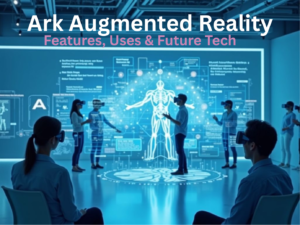
Ark AR combines multiple technologies to deliver its immersive experiences:
- AR Hardware – Smart glasses, headsets, and mobile devices display digital content overlaying the real world.
- Knowledge Memory – AI-powered memory systems allow the AR environment to understand context and provide relevant information.
- Computer Vision – Cameras and sensors analyze the physical environment to detect objects, surfaces, and spatial relationships.
- Real-Time Processing – Powerful processors ensure that digital elements adapt instantly to changes in the user’s environment.
This combination makes Ark AR more than just visual overlays—it becomes an intelligent interactive system capable of responding to user needs in real-time.
Advantages of Ark Augmented Reality
Enhanced User Engagement
Interactive and knowledge-powered features keep users engaged, whether in education, gaming, or workplace scenarios.
Improved Learning and Retention
By visualizing concepts and interacting with digital content, learners understand and retain information better than traditional methods.
Safe Training Environments
Simulated AR scenarios reduce real-world risks during training in fields like healthcare, manufacturing, or emergency response.
Boosted Productivity
Teams can collaborate in immersive virtual spaces, reducing misunderstandings and improving workflow efficiency.
Creativity and Innovation
Ark AR inspires creativity by allowing users to experiment with ideas in virtual spaces without physical constraints.
Challenges and Limitations
- High Cost of Devices – AR hardware can be expensive, limiting access for some users or organizations.
- Technical Complexity – Developing interactive and context-aware AR experiences requires advanced skills and computing resources.
- Privacy Concerns – AR devices may collect data about surroundings and users, raising security and privacy questions.
- User Adaptation – Users may need time to adapt to immersive AR environments, especially for complex professional tasks.
- Battery and Processing Limitations – Real-time AR processing can be demanding, impacting device performance and battery life.
The Future of Ark Augmented Reality
Ark AR is still evolving, but its future potential is immense:
- Widespread Adoption – As devices become more affordable, Ark AR could become common in education, workplaces, and homes.
- Integration with AI – Combining Ark AR with advanced AI models will enable smarter, predictive interactions and personalized experiences.
- Immersive Social Experiences – Social platforms may use Ark AR to create shared virtual spaces for friends, families, and communities.
- Healthcare Revolution – AR-guided procedures and remote medical consultations could transform patient care globally.
- Next-Generation Gaming – Gamers will enjoy unprecedented levels of immersion, blending the physical and virtual worlds seamlessly.
Conclusion
Ark Augmented Reality represents a major leap in immersive technology. By combining AR with knowledge memory, real-time interaction, and multi-device support, Ark AR is not just a visual overlay—it’s an intelligent, interactive system. From education and healthcare to workplace collaboration and entertainment, Ark AR has the potential to transform the way we live, learn, and work. As technology evolves, Ark AR may become an essential part of daily life, shaping the future of immersive experiences in countless ways.
FAQs
How Ark Augmented Reality Stands Out from Traditional AR
Ark AR uses knowledge, memory, and context-aware AI, enabling intelligent, interactive, and adaptive augmented experiences.
Can Ark AR be used for remote collaboration?
Yes, it allows multiple users to interact with shared holograms and virtual spaces in real-time.
Is Ark AR suitable for educational purposes?
Absolutely, it enhances learning with 3D visualizations, simulations, and interactive content for students and trainees.
Which devices support Ark Augmented Reality?
Ark AR works on smart glasses, AR headsets, tablets, and smartphones, providing flexible and immersive experiences.
What industries can benefit from Ark AR?
Education, healthcare, architecture, retail, entertainment, and workplace collaboration are among the primary industries.