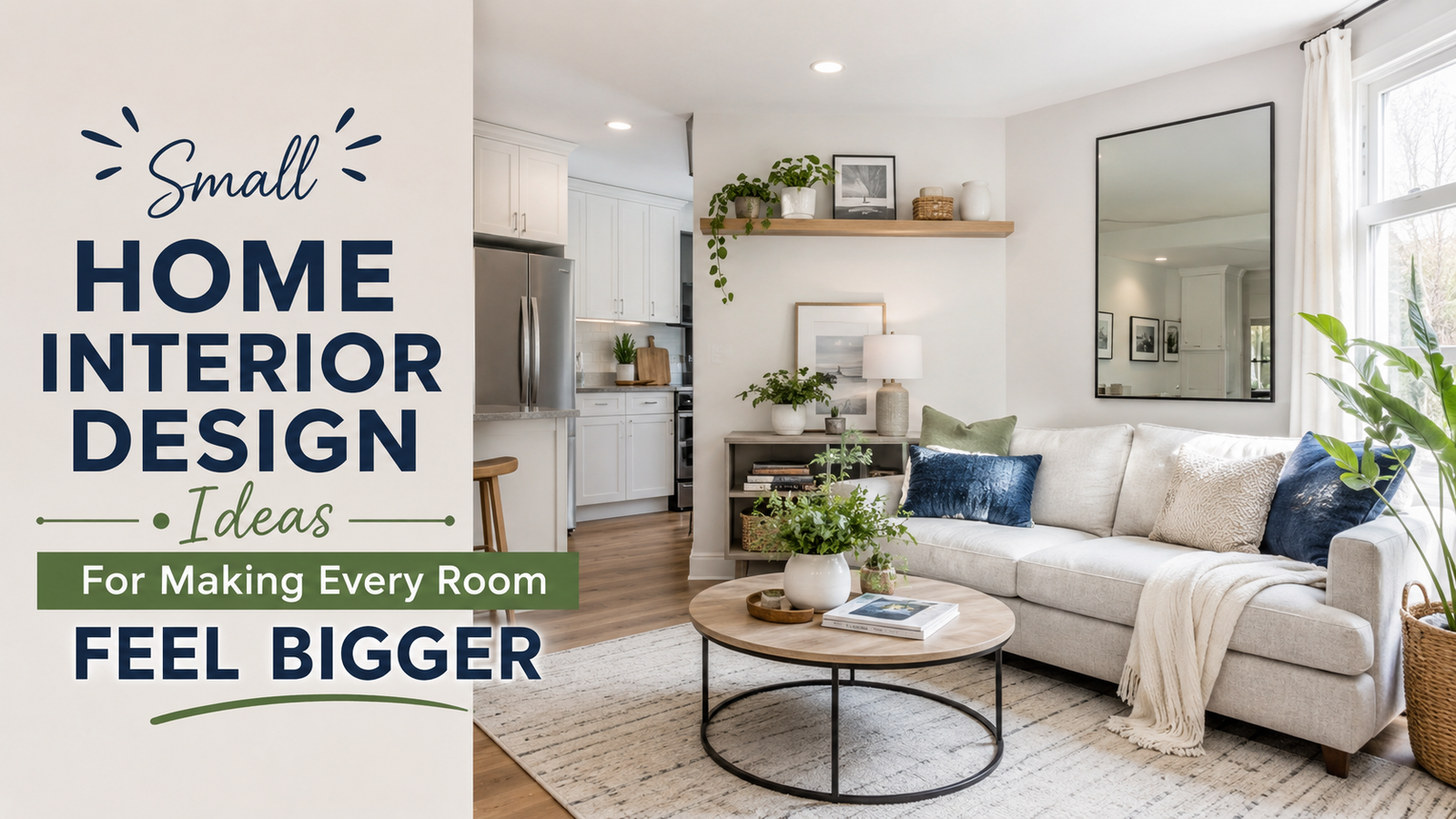
Living in a smaller house or apartment does not mean giving up on attractive interior design. In fact, limited space can encourage homeowners to become more creative with furniture, storage, lighting, and decoration.
The secret to successful small-home design is not trying to fit as many things as possible into a room. Instead, the focus should be on selecting useful furniture, maintaining clear pathways, using vertical space, and creating visual openness.
With a few practical strategies, even a compact property can feel comfortable, organized, and stylish.
Begin With Decluttering
Before buying new furniture, remove items that are no longer useful. Clutter takes up physical space and also makes rooms appear smaller.
Go through belongings room by room and decide what should be kept, stored, donated, or discarded. Once unnecessary objects are removed, it becomes much easier to understand what furniture and storage solutions are actually needed.
A simple interior often feels larger because the eye can move through the room without encountering too many distractions.
Select Multi-Purpose Furniture
Furniture that performs more than one function can be extremely valuable in a small home.
A storage ottoman can provide seating while keeping blankets and other items hidden. A sofa bed can transform a living room into a guest bedroom. A dining table can also function as a workspace when necessary.
This type of furniture reduces the total number of objects needed in a room while providing greater flexibility.
Use Vertical Space
When floor space is limited, look upward. Walls can provide valuable storage without reducing the area available for walking.
Tall bookshelves, wall-mounted cabinets, floating shelves, and vertical storage systems can hold a large number of items.
However, avoid filling every wall. Leaving some open sections creates visual breathing room and prevents the interior from feeling overloaded.
Choose a Light and Consistent Color Scheme
Color can affect how large a room appears. Light shades generally create a more open visual impression, particularly when combined with natural daylight.
This does not mean every surface needs to be white. Soft beige, cream, light gray, pale wood, and other subtle shades can create a bright foundation.
Accent colors can then be introduced through artwork, cushions, plants, rugs, and accessories.
Use Mirrors Strategically
Mirrors can be useful decorative elements in smaller interiors. When positioned appropriately, they can reflect light and create the impression of additional depth.
A large mirror can work well opposite a window, while smaller decorative mirrors can be grouped together to create a feature wall.
The objective is to use mirrors as part of the overall design rather than adding them randomly.
Keep Furniture Proportional
Large furniture can dominate a small room. Before purchasing a sofa, bed, dining table, or cabinet, measure the available area carefully.
Furniture with a slimmer profile can provide the required function without overwhelming the room. Pieces with raised legs can also expose more floor underneath, helping the space appear visually lighter.
Do not forget to measure doorways, staircases, and elevators before purchasing large furniture. A piece that fits the room may still be difficult to bring inside.
Create Organized Display Areas
Small homes often contain decorative items, books, plants, and personal collections. Instead of placing these objects randomly, create one or two organized display areas.
Floating shelves can provide a simple solution. A narrow cabinet can also display decorative pieces while offering hidden storage below.
The same principles are useful in commercial furniture showrooms, where products need to be presented clearly without making the environment feel overcrowded. Retail Display Stands can be designed to organize products while creating attractive focal points.
Make Use of Difficult Corners
Corners are frequently wasted in small homes. A narrow desk, corner shelf, reading chair, or custom cabinet can turn an unused corner into a useful part of the room.
Oddly shaped areas can be particularly suitable for customized solutions. Instead of forcing standard furniture into an awkward location, consider furniture designed specifically for that space.
Custom Display Racks demonstrate how customized storage and display structures can be designed around particular dimensions. Similar thinking can be applied to residential shelving, cabinets, and storage furniture.
Improve the Entryway
Even a small entrance can be made more functional. A slim console, wall hooks, narrow shoe cabinet, or compact bench can help organize everyday belongings.
Keep the entrance as clear as possible. Since it is the first area visitors see, an organized entryway immediately creates a better impression of the entire home.
Design a Flexible Home Office
A dedicated office is not always possible in a compact property. Fortunately, a workspace can be created in many different ways.
A small desk can fit into a bedroom corner, living room, hallway, or even a large closet. Wall-mounted shelves can provide storage above the desk without taking up additional floor area.
When work is finished, organizers and storage cabinets can help keep office equipment out of sight so the room can return to its normal function.
Add Plants and Natural Elements
Plants can make small interiors feel fresher and more lively. Choose varieties that suit the available light and available space.
Hanging plants, narrow planters, and small tabletop plants can introduce greenery without occupying much floor area.
Natural wood, woven baskets, cotton fabrics, and other organic textures can complement plants and create a warmer atmosphere.
Professional Solutions for Commercial Interiors
Ant Display is a leading manufacturer of retail store fixtures, mall kiosks & displays in China. We offer customized showcases, stands, racks & shelving, commercial furniture & more.
The company specializes in customized display solutions for businesses that require professional retail environments. Its product range can support furniture stores, home décor retailers, lifestyle brands, shopping malls, showrooms, and other commercial spaces.
Ant Display provides full shop design and retail displays for USA, CA, AU & Europe. Its customized commercial furniture and display solutions can help businesses make efficient use of available space while presenting products in a professional manner.
Think Beyond Current Trends
Interior design trends can provide useful inspiration, but homeowners should not allow trends to control every decision. A small home benefits more from practical choices that remain useful over time.
Use trendy colors and decorative styles in smaller, replaceable items rather than expensive permanent fixtures. This makes it easier to refresh the interior in the future.
Quality, proportion, organization, and functionality should remain the foundation of the design.
Conclusion
A small home can be attractive and comfortable when every part of the space is planned carefully. Decluttering, choosing proportional furniture, using vertical storage, introducing mirrors, selecting suitable colors, and investing in multifunctional pieces can make a significant difference.
The most important idea is to make every item earn its place. Furniture should provide useful functions, decoration should add personality, and storage should help maintain an organized environment.
With smart planning and a creative approach, limited square footage does not have to limit design possibilities. A compact home can still feel spacious, modern, personal, and welcoming.