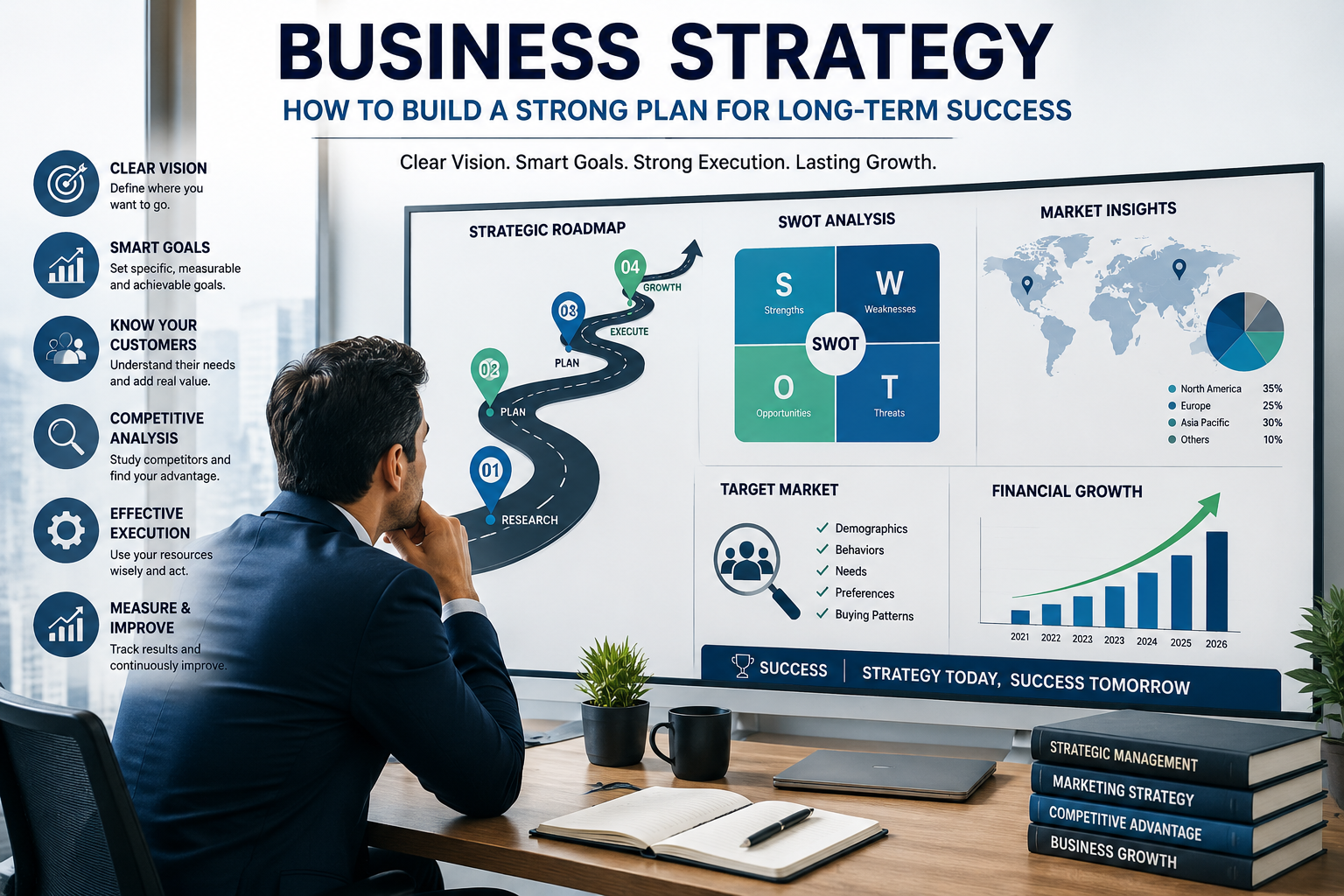
In today’s fast-changing online era, businesses are evolving at a pace that feels faster every year. The systems and tools that once seemed advanced are now struggling to keep up with growing demands. Companies are dealing with more information, more customers, and more complex operations, which is pushing them toward smarter and more connected solutions instead of traditional software setups.
This is where the concept of Truzio becomes relevant. It is being discussed as a modern framework built to support the next generation of business transformation. Instead of working as a simple tool, it connects different parts of a business in a more organized way, helping improve how work is managed and decisions are made. As 2026 approaches, the focus is clearly shifting toward faster, more efficient, and better-structured systems, and Truzio fits naturally into this changing demand.
What is Truzio?
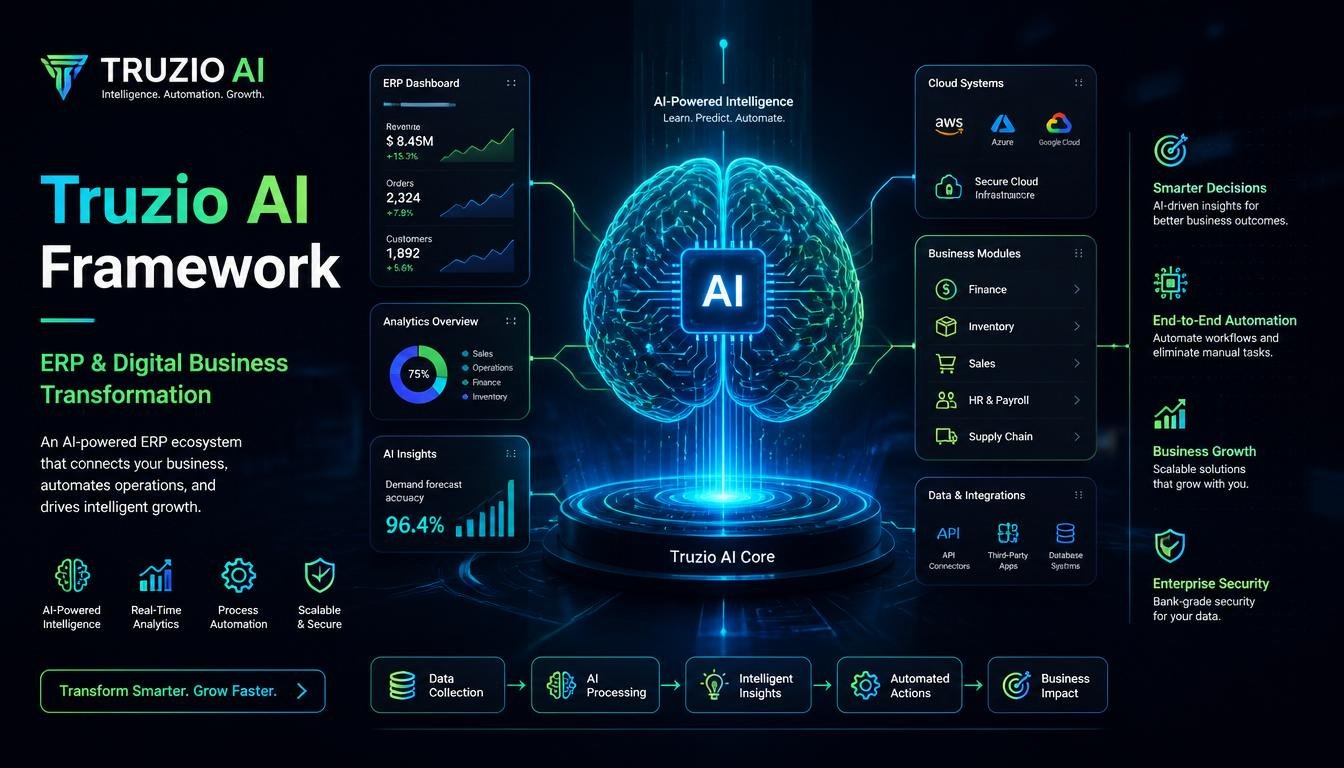
Truzio can be described as an advanced AI-based framework that is designed to improve how modern digital businesses and enterprise systems operate. Instead of functioning like a single application, it works more like a connected ecosystem that brings together multiple business processes under one intelligent layer. The main idea behind Truzio is to reduce manual effort, improve decision-making, and allow systems to handle complex business operations with minimal human intervention.
What makes Truzio different from traditional ERP or business tools is its deep integration with artificial intelligence. It does not just store or display information; it processes it and tries to understand the patterns behind it. This means businesses can move beyond simple reporting systems and start using intelligent insights that guide them toward better actions and outcomes.
In simple words, Truzio works like a smart digital assistant for businesses. It connects different departments, organizes data in real time, and helps companies operate in a more efficient and structured way. Over time, it learns from business behavior and improves its performance, making it more useful the longer it is used.
How Truzio AI Framework Works
The working system of Truzio is built around data intelligence and automation. It collects information from different sources inside a business, such as ERP modules, customer management systems, financial records, and operational tools. Once this data is collected, the AI engine processes it in real time and looks for meaningful patterns that can help improve business performance.
After analyzing the data, Truzio does not stop at just showing reports or dashboards. Instead, it moves one step ahead by generating insights and, in some cases, triggering automated actions. For example, if a company’s sales data shows a sudden drop in demand, the system can highlight the issue and suggest possible reasons or even recommend actions to fix it. This makes business management more proactive rather than reactive.
Another strong part of Truzio’s working model is its ability to learn continuously. It uses machine learning techniques to understand how a business operates over time. As it collects more data, its predictions become more accurate, and its suggestions become more relevant. This creates a system that evolves along with the business instead of staying static.
Truzio in ERP Systems
Enterprise Resource Planning systems are already an essential part of most modern organizations, but many traditional ERP systems are complex and require a lot of manual input. Truzio brings a modern upgrade to this structure by adding intelligence and automation layers on top of existing ERP systems without forcing companies to rebuild everything from scratch.
When integrated into ERP systems, Truzio helps connect different departments such as finance, human resources, supply chain, and inventory management into one smooth workflow. Instead of dealing with disconnected data entries, everything becomes synchronized, updated, and accessible in real time. This reduces confusion and improves accuracy across the entire organization.
One of the most valuable improvements Truzio brings to ERP systems is predictive analysis. Instead of just showing what has already happened, it helps businesses understand what is likely to happen in the future. For example, it can forecast inventory shortages or financial trends based on past and current data, allowing companies to make better and faster decisions before problems even appear.
Digital Business Transformation with Truzio
Digital transformation is no longer optional for businesses; it has become a necessity for survival in a highly competitive environment. Companies that fail to adapt often struggle to keep up with market demands. Truzio plays a key role in this transformation by helping organizations shift from traditional manual systems to intelligent automated workflows.
One of the biggest changes Truzio brings is the shift in mindset from reactive operations to proactive business management. Instead of waiting for problems to occur and then solving them, businesses can now predict issues before they happen and take preventive action. This not only saves time but also reduces financial and operational risks.
Another important aspect of digital transformation through Truzio is flexibility. Modern businesses operate in environments that change quickly, and systems need to adapt at the same speed. Truzio allows organizations to adjust their workflows dynamically based on real-time data, making operations more responsive and efficient in unpredictable market conditions.
Key Features of Truzio Platform
Truzio offers several advanced capabilities that make it suitable for modern business environments. One of its most important features is automation, which helps eliminate repetitive manual tasks. This allows employees to focus more on strategic work rather than spending time on routine operations, which increases overall productivity.
Another major feature is its intelligent data analysis system. Instead of simply displaying raw numbers, Truzio interprets the data and presents meaningful insights in a way that is easy to understand. This is especially helpful for business owners and decision-makers who may not have technical backgrounds but still need clear and actionable information.
The platform also focuses heavily on integration and security. It is designed to work with existing systems without disrupting current operations, which makes it easier for companies to adopt it without major technical changes. At the same time, it ensures that sensitive business data remains protected, which is extremely important in today’s digital landscape.
Benefits for Startups and Large Enterprises
For startups, Truzio offers a powerful advantage by reducing the need for large technical teams. Early-stage businesses often face challenges related to limited resources, and having an intelligent system that automates key processes helps them grow faster with fewer operational burdens. It allows founders to focus more on innovation and business strategy instead of getting stuck in daily operational tasks.
For large enterprises, the impact is even more significant because they deal with huge volumes of data and complex workflows. Managing everything manually becomes difficult and time-consuming. Truzio helps unify all this information into one system, making it easier to monitor performance across departments and maintain consistency throughout the organization.
Another major benefit is cost efficiency. By automating repetitive tasks and reducing human dependency in certain areas, businesses can significantly lower operational costs. Over time, this leads to better resource utilization and improved profitability, which is a key goal for any organization.
Real-World Applications of Truzio
In real-world business environments, Truzio can be used across multiple industries with different needs. In retail businesses, it helps in managing stock levels by predicting product demand and preventing shortages or overstock situations. This ensures smoother supply chain operations and better customer satisfaction.
In the finance sector, Truzio can be used to detect unusual transaction patterns and improve risk management. It can analyze financial behavior and highlight potential issues before they become serious problems. This helps organizations maintain compliance and improve security in financial operations.
In logistics and manufacturing, Truzio improves supply chain efficiency by predicting delays, optimizing delivery routes, and managing resources more effectively. This leads to faster operations, reduced costs, and improved overall performance in production and distribution systems.
Future of Truzio in 2026 and Beyond
As technology continues to evolve, the role of AI-driven frameworks like Truzio is expected to become even more important. In 2026 and beyond, businesses will rely more heavily on systems that can not only process data but also make intelligent decisions in real time. Truzio is expected to evolve in this direction by becoming more predictive, adaptive, and autonomous.
Future versions of such systems may include deeper automation where decisions are not just suggested but optimized automatically based on real-time conditions. This means businesses will spend less time managing systems and more time focusing on growth and innovation.
At the same time, customization will also become a major focus. Every business is different, and Truzio is likely to become more flexible so that organizations can adjust it according to their specific industry needs, workflows, and goals.
Challenges and Limitations
Even though Truzio brings many advantages, it also comes with some challenges that businesses need to consider. One of the main challenges is integration complexity, especially for companies that already have old or outdated systems. Connecting everything smoothly may require time and proper planning.
Another challenge is user adaptation. Employees who are used to traditional systems may initially find it difficult to adjust to AI-driven workflows. This often requires training and gradual implementation so that teams can fully understand and trust the new system.
Data quality is also an important factor. Since Truzio depends heavily on data to generate insights, poor or inconsistent data can affect its performance. Businesses need to ensure that their data systems are clean and well-structured to get the best results.
Conclusion
Truzio represents a modern shift in how businesses use technology to manage operations, make decisions, and grow in a competitive digital world. By combining artificial intelligence, automation, and ERP integration, it creates a smarter and more efficient business environment. As we move deeper into 2026, systems like Truzio are likely to become an essential part of digital transformation strategies for both startups and large enterprises, helping them work faster, smarter, and more effectively than ever before.
FAQs
What exactly is Truzio?
Truzio is an AI-powered framework built to modernize how digital businesses operate. It connects different systems like ERP, data tools, and business applications into one smart environment. The main idea is to reduce manual work and help companies manage operations using automation and intelligent insights.
Is Truzio a software or a platform?
Truzio is not just a single software. It works more like a complete digital framework that can connect with existing business systems. Instead of replacing everything, it improves and upgrades current tools by adding AI features and automation capabilities on top of them.
How does Truzio improve ERP systems?
Truzio makes ERP systems more powerful by adding smart automation and real-time data processing. It links different departments like accounting, HR, inventory, and operations into one connected system. It also helps businesses by giving predictive insights instead of just basic reports.
Who can benefit from using Truzio?
Truzio is useful for all types of businesses, including startups and large enterprises. Small businesses can use it to save time and reduce workload, while bigger companies can manage large amounts of data more efficiently. It is designed to fit different industries and business needs.
What is the future of Truzio?
In the coming years, especially around 2026 and beyond, Truzio is expected to become more advanced with stronger AI automation and smarter decision-making features. It will likely play a bigger role in helping businesses run fully digital, efficient, and predictive operations.