
United Airlines Flight UA770 was expected to be a routine journey, carrying passengers safely toward their destination. However, during the flight, the crew detected a situation that required immediate attention. According to reports, the pilots decided to divert the aircraft as a precautionary safety measure. Emergency diversions are not common, but they are part of standard aviation safety procedures when something unexpected occurs. The decision to change course is always made with passenger safety as the top priority. In this case, the aircraft was redirected to the nearest suitable airport so that the issue could be examined while ensuring everyone on board remained safe and calm throughout the situation.
Passengers initially noticed that something unusual was happening when the aircraft began altering its route and the captain made an announcement explaining the diversion. While such moments can create anxiety, airline crews are trained to handle these situations carefully and professionally. The pilots coordinated with air traffic control and prepared for a safe landing at an alternate airport. Cabin crew members reassured passengers and provided updates whenever possible. Fortunately, emergency diversions are usually precautionary rather than dangerous, and most end safely. The UA770 diversion quickly gained attention online as travelers shared their experiences and people searched for information about what exactly happened during the flight.
Timeline of the UA770 Emergency Diversion Incident
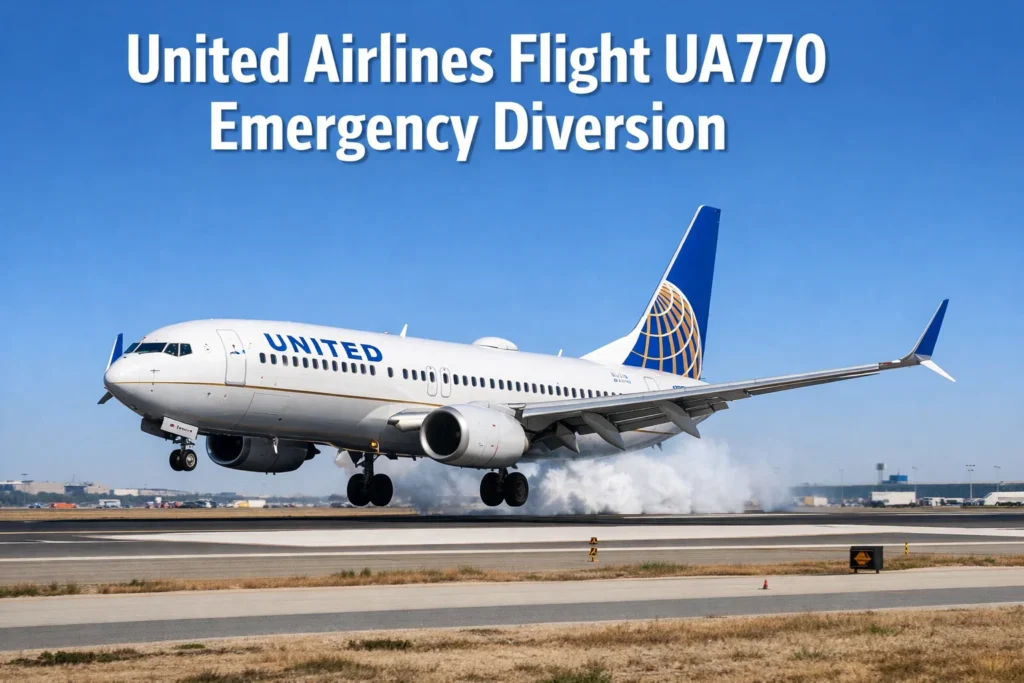
The timeline of the UA770 emergency diversion began when the flight was already cruising at a normal altitude. At that point, the pilots detected a potential issue that required closer attention. Following aviation safety protocols, they contacted air traffic control to discuss the situation and evaluate possible options. Within minutes, the crew made the decision to divert the aircraft to a nearby airport where assistance and inspection could be provided. The change in route appeared on flight-tracking services, quickly catching the attention of aviation enthusiasts and passengers’ families who were monitoring the journey online.
As the aircraft approached the diversion airport, the crew prepared the cabin and passengers for landing. The captain explained the situation in a calm and clear announcement, ensuring that everyone understood the diversion was precautionary. Ground teams at the alternate airport were informed and prepared to assist once the aircraft arrived. After landing safely, technical teams began inspecting the plane to determine the exact cause of the diversion. While the unexpected stop caused passenger delays, the careful, systematic response demonstrated that aviation systems are designed to prioritize safety above all else.
Possible Reasons Behind the United Airlines UA770 Diversion
Emergency diversions can happen for many reasons, and aviation authorities typically investigate each case to determine what occurred. In situations like the UA770 incident, pilots may divert a flight due to mechanical alerts, unusual instrument readings, or other technical concerns that require inspection on the ground. Even minor warnings can lead to a diversion because airline safety policies encourage crews to act cautiously rather than take unnecessary risks. These decisions are guided by strict safety standards that all commercial airlines follow worldwide to protect passengers and crew members.
Another possible reason for a diversion could involve passenger health or onboard medical emergencies. When someone on a flight requires urgent medical attention, pilots often choose to land at the nearest airport so that medical professionals can assist quickly. Such diversions are common in aviation and reflect the responsibility airlines have toward passenger well-being. In many cases, the aircraft itself may be functioning normally, but the diversion becomes necessary to provide immediate care to someone on board who needs help.
Weather conditions or operational factors can also play a role in emergency diversions. Sudden storms, unexpected turbulence, or airport operational issues sometimes force pilots to change their route. Even if the aircraft is functioning perfectly, safety concerns may require landing somewhere different from the original destination. Aviation systems are designed with flexibility so pilots can quickly adapt to changing conditions. While the exact cause of the UA770 diversion would be confirmed through official reports, these common factors illustrate why such decisions are made in modern air travel.
How Passengers Experienced the UA770 Emergency Situation
Passengers on board United Airlines Flight UA770 experienced a mix of curiosity, concern, and relief as the situation unfolded. Many travelers initially noticed the aircraft changing direction or descending earlier than expected. Shortly afterward, the captain informed everyone about the diversion and explained that the flight would land at a different airport as a precaution. Hearing the announcement helped passengers understand what was happening, although some still felt nervous due to the unexpected change in plans during the journey.
Despite the uncertainty, cabin crew members played a crucial role in maintaining a calm environment throughout the flight. They walked through the cabin, checked on passengers, and answered questions whenever possible. Experienced travelers recognized that diversions are part of aviation safety and trusted the crew’s professionalism. As the aircraft approached the diversion airport and landed safely, many passengers felt a sense of relief. Later, several travelers shared their experiences online, describing how the crew’s calm communication helped keep the situation under control.
Crew Response During the United Airlines Flight UA770 Diversion

Immediate Communication and Decision Making
When the situation on Flight UA770 required attention, the flight crew quickly followed established aviation procedures. The pilots communicated with air traffic control to report the issue and request guidance about the safest course of action. Their priority was to evaluate all available options while maintaining control of the aircraft and ensuring passenger safety. The decision to divert was made carefully after assessing the situation, and the captain informed passengers calmly and professionally.
Cabin Crew Support for Passengers
While the pilots managed the aircraft and navigation, cabin crew members focused on passenger safety and comfort. They reassured travelers, answered questions, and ensured everyone remained seated and calm during the diversion process. Their training prepared them to handle unusual situations with confidence. By maintaining a supportive and organized atmosphere in the cabin, the crew helped reduce anxiety among passengers who might have been worried about the unexpected change in the flight plan.
Coordination With Ground Teams
At the same time, airline operations teams on the ground were alerted about the diversion. Airport authorities and emergency services were prepared to assist if necessary once the aircraft landed. This coordination ensured that technical teams could immediately inspect the plane and address any potential issues. Such teamwork between pilots, cabin crew, air traffic control, and ground staff demonstrates how aviation systems work together to manage unexpected events safely and efficiently.
Safety Procedures Followed During an Emergency Diversion
Airlines follow strict safety procedures whenever a flight must divert from its planned route. The first step involves assessing the situation and determining whether landing at the nearest suitable airport is necessary. Pilots review aircraft systems, communicate with air traffic control, and analyze weather and airport conditions before making the final decision. Once the diversion is confirmed, the captain informs passengers and prepares the aircraft for a safe descent and landing at the alternate location.
During the diversion process, cabin crew members ensure that passengers follow safety instructions and remain calm. They check seat belts, secure the cabin, and assist anyone who may need help. Meanwhile, ground teams at the diversion airport prepare to receive the aircraft. Maintenance crews, medical personnel, or emergency responders may stand by depending on the situation. These coordinated procedures are designed to minimize risk and ensure that every passenger and crew member remains safe throughout the unexpected change in travel plans.
What Happens When a Flight Is Forced to Divert?
When a flight is forced to divert, several steps occur simultaneously to ensure the aircraft lands safely. Pilots first identify the most suitable alternate airport based on distance, weather conditions, runway availability, and emergency services. After coordinating with air traffic control, the aircraft begins adjusting its route and altitude toward the selected airport. Passengers are informed about the situation, and the cabin crew prepares everyone for landing while maintaining a calm and organized environment inside the aircraft.
After landing at the alternate airport, the aircraft is directed to a gate or designated area where inspections and assistance can take place. Technical teams may examine the plane if a mechanical issue is suspected, while medical teams assist if a passenger’s health emergency caused the diversion. Airlines also work to arrange new travel plans for passengers, including rebooking flights or providing accommodations if necessary. Although diversions can disrupt schedules, they are essential for maintaining high safety standards in aviation.
After Landing: What Happened to United Airlines Flight UA770?
Once United Airlines Flight UA770 landed safely at the diversion airport, ground crews quickly began their inspection process. Maintenance technicians carefully examined the aircraft systems to determine whether any technical issue had triggered the diversion. These inspections are a routine part of aviation safety procedures and help ensure that the aircraft can continue operating without risk. Passengers remained on board or waited in the terminal while the airline coordinated the next steps for the flight.
During this time, airline staff worked to keep passengers informed about the situation. Updates were provided regarding possible delays, connecting flights, and travel arrangements. Depending on the outcome of the inspection, the aircraft might either continue its journey after clearance, or passengers could be transferred to another flight. Airlines usually prioritize minimizing inconvenience while still following strict safety checks before allowing the aircraft to depart again.
In many diversion cases, the aircraft is cleared to continue its route once technicians confirm that everything is functioning normally. If repairs or further investigation are required, the airline arranges alternative transportation for passengers. While the diversion may have disrupted travel plans, the safe landing and careful follow-up procedures demonstrate how aviation safety systems operate effectively. The experience of Flight UA770 ultimately highlighted the industry’s commitment to protecting passengers even when unexpected situations occur.
How Airlines Handle Emergency Diversions and Passenger Safety
- Immediate Risk Assessment – Pilots quickly analyze the situation and determine the safest course of action.
- Coordination with Air Traffic Control – Continuous communication ensures safe routing to an alternate airport.
- Clear Passenger Communication – Captains and cabin crew inform passengers and provide reassurance.
- Cabin Safety Preparation – Crew members secure the cabin and ensure passengers follow safety instructions.
- Ground Team Readiness – Airport authorities, medical teams, and maintenance staff prepare for the aircraft’s arrival.
- Post-Landing Support – Airlines arrange inspections, passenger assistance, and alternative travel plans if necessary.
Lessons Travelers Can Learn From the UA770 Diversion
Experiences like the UA770 diversion remind travelers that aviation safety systems are designed to handle unexpected situations effectively. While diversions may seem alarming at first, they are usually precautionary actions taken to protect passengers and crew. Pilots receive extensive training to manage emergencies, and airlines follow strict safety guidelines whenever something unusual occurs. Understanding this process can help passengers feel more confident about the reliability of modern air travel and the professionalism of airline crews.
Travelers can also learn the importance of staying calm and prepared during any unexpected travel disruption. Listening carefully to crew instructions, remaining patient, and trusting the safety procedures in place can make the experience less stressful. Carrying essential items, such as medications or important documents, in hand luggage can also help if a diversion leads to delays. The UA770 incident ultimately shows that even when travel plans change suddenly, safety remains the highest priority in aviation.
Stay Calm and Follow Crew Instructions
During an unexpected flight diversion, the most important thing passengers can do is remain calm and carefully follow the instructions provided by the flight crew. Pilots and cabin crew members receive extensive training to manage unusual situations safely and efficiently. When a diversion occurs, they communicate with air traffic control, monitor aircraft systems, and prepare the cabin for landing at an alternate airport. Their instructions are designed to keep everyone safe and ensure the process runs smoothly. Listening closely to announcements, keeping seat belts fastened when requested, and avoiding unnecessary panic can help maintain order inside the cabin during a stressful moment.
Remaining calm also helps other passengers feel more comfortable during the situation. When travelers stay composed and cooperate with crew instructions, the cabin environment becomes safer and easier to manage. Cabin crew members often walk through the aisle to answer questions, provide reassurance, and check that everyone is following safety procedures. Trusting their guidance is essential because they understand how to handle these situations effectively. While a diversion may cause delays or confusion, passengers who remain patient and cooperative help ensure that the aircraft can land safely and that the entire process is handled as smoothly as possible.
Why Emergency Diversions Are Sometimes Necessary
Emergency diversions are an essential part of aviation safety and occur when pilots determine that continuing to the original destination may not be the safest option. Modern aircraft are equipped with advanced monitoring systems that alert pilots to unusual readings or technical issues. Even if the problem appears minor, airline policies encourage crews to take precautionary action rather than ignore potential risks. By diverting to the nearest suitable airport, pilots can have the aircraft inspected and ensure that passengers remain safe throughout the journey.
Another common reason for flight diversions involves passenger medical emergencies. If someone on board experiences a serious health issue, such as chest pain or difficulty breathing, the crew may request an immediate diversion to reach medical assistance quickly. Airlines consider passenger well-being a top priority, and pilots are trained to make rapid decisions in such situations. Diverting to a nearby airport allows trained medical professionals to provide care as soon as the aircraft lands.
Weather conditions can also make diversions necessary during a flight. Sudden storms, strong winds, or poor visibility at the destination airport may create unsafe landing conditions. In these cases, pilots may choose to land at another airport with better weather or safer runway conditions. Although diversions can disrupt travel schedules, they are always made with safety in mind. These decisions demonstrate how aviation professionals prioritize the protection of passengers and crew above convenience.
Passenger Safety Measures During Flight Diversions
Airlines follow strict safety measures whenever a flight diversion occurs. The flight crew begins by assessing the situation and communicating with air traffic control to determine the safest alternate airport. Once the decision is made, the captain informs passengers about the diversion and explains what to expect during the landing process. Cabin crew members then prepare the cabin by checking seat belts, securing loose items, and ensuring that passengers remain seated. These steps help maintain order and reduce the risk of injury while the aircraft changes its route and begins descending toward the diversion airport.
In addition to cabin preparation, airline crews remain attentive to passenger needs throughout the diversion. They monitor the cabin for any signs of distress and provide assistance to travelers who may feel anxious or confused. Clear communication is an important part of the process because it helps passengers understand what is happening and why. Once the aircraft lands safely, ground teams are ready to provide further assistance, including medical support, technical inspections, or travel arrangements, depending on the reason for the diversion.
How Diversions Affect Flight Schedules and Connections
Flight diversions often have a significant impact on travel schedules and connecting flights. When an aircraft lands at an alternate airport, passengers may experience delays while the situation is assessed and resolved. If the diversion was caused by a technical issue, maintenance teams may need time to inspect the aircraft before it can continue its journey. In some cases, the airline may arrange a replacement aircraft or rebook passengers on different flights. Travelers with connecting flights might miss their original connections, but airlines usually assist by providing updated travel arrangements or alternative routes.
Airlines also work closely with airport staff and operations teams to minimize disruption after a diversion. Passengers may receive updates through announcements, airline apps, or customer service representatives in the terminal. Depending on the length of the delay, airlines may provide meal vouchers, accommodation, or transportation to help passengers manage the unexpected interruption. Although diversions can cause inconvenience, the priority remains ensuring safety while helping travelers reach their destinations as efficiently as possible once the situation has been resolved.
Conclusion
The emergency diversion of United Airlines Flight UA770 highlights how modern aviation systems are designed to prioritize passenger safety above all else. While unexpected events during a flight can cause concern and temporary disruption, they also demonstrate the professionalism and preparedness of airline crews and aviation authorities. Pilots, cabin crew, air traffic controllers, and ground teams work together to manage diversions efficiently and ensure a safe landing whenever unusual situations arise. For passengers, experiences like this serve as a reminder to remain calm, follow crew instructions, and trust the safety procedures built into air travel. Ultimately, diversions are precautionary actions that protect lives and reinforce the reliability of the aviation industry worldwide.
FAQs
Why was United Airlines Flight UA770 diverted?
The flight was diverted as a precautionary safety measure. Diversions can occur due to technical alerts, passenger medical emergencies, or adverse weather conditions. The crew always prioritizes passenger safety above all else.
How do pilots decide where to divert a flight?
Pilots coordinate with air traffic control to select the nearest suitable airport with proper runways, emergency services, and weather conditions. The goal is to ensure a safe landing for all passengers and crew.
Are emergency diversions dangerous?
Most diversions are precautionary and not dangerous. Airlines follow strict protocols, and pilots are trained to manage such situations safely. Passengers are typically well protected throughout the process.
What should passengers do during a diversion?
Passengers should stay calm, follow crew instructions, keep seat belts fastened, and listen carefully to announcements. Remaining composed helps the cabin crew manage the situation efficiently.
How do diversions affect connecting flights and travel plans?
Diversions can cause delays or missed connections. Airlines typically assist passengers by rebooking flights, arranging accommodations, or providing travel updates to minimize inconvenience while ensuring safety.
Latest Blogs:
| R-LiveStreamFail |
| RubMaps |
| VeneAjelu |
| AIMPcity |
| ReadMyManga .com |